Showing posts with label iMac. Show all posts

Educational Apple iMac 21.5-Inch Model Revealed

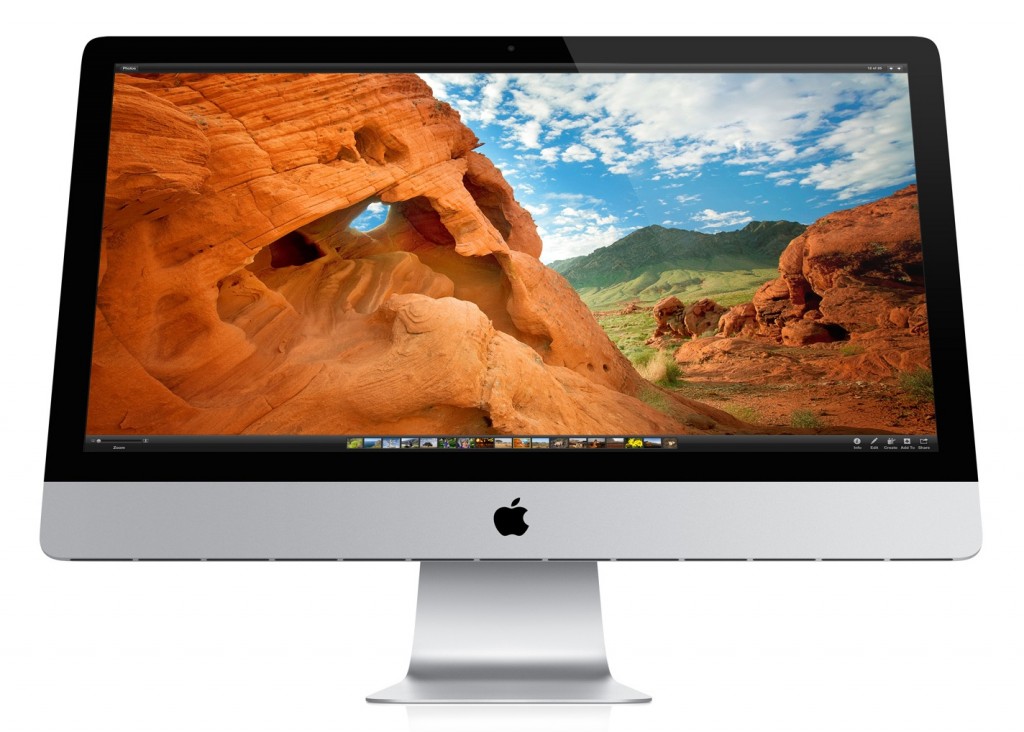
Educational Apple iMac 21.5-Inch Model RevealedApple has unveiled a new version of its popular iMac series. The new Apple iMac is a 21.5 inch educational offering available to schools and universities.

The new model features all of the basic options available via consumer devices, however it scales down the processor to a dual-core Intel i3 option, rather than the quad-core i5 setup. Also changed is the GPU which now features an Intel HD 4000 integrated graphics card in place of a discrete card option.

The new 21.5-inch iMac is $100 more expensive than previous education models but it makes up for that pricing with double the storage capacity and double the RAM.
Educational iMac 21 5 inch


For comparison sake, the previous education iMac model features a 3.1 GHz dual-core i3 processor, 2GB RAM and a 250 hard drive. The new model features a 3.3GHz processor, 4GB RAM and a 500GB hard drive.

While the original education version featured a Firewire 800 connector, the new version offers Apple’s Thunderbolt port. The new educational iMac also brings with it USB 3.0 and Bluetooth 4.0 connectivity options.

The new educational suite also follows suite with older versions by ditching an optical drive.

Apple has also decided to go with a wired Apple Keyboard and a wired Apple Mouse in place of its preferred Magic Mouse and wireless keyboard setup.

Educational buyers can pick up the new iMac version for $1099, that’s nearly $200 cheaper than the consumer version of the 21.5-inch iMac. While the discount is welcomed the consumer version features a much faster processor, Nvidia GeForce GPU, 8GB RAM and a 1TB hard drive.

Individuals and families are barred from buying the new 21.5-inch iMac which is earmarked for institutional purchases only.


Educational Apple iMac 21.5-Inch Model Revealed

While Apple is listing most iMac models in the US with 24 hour shipping periods, the education version is showing a 5-7 day delay. Apple is also offering upgrades on the system which will likely delay the shipping process further.

Do you think the new educational Apple iMac is a good deal?

keep up with the newest technologies and contemplate about how these will be used in the future. On this blog I'll share my thoughts about the future of technology, based on the High Tech RoadShow inventions of today. Enhanced by Zemanta
Enhanced by Zemanta
Share: 

Disposable Computers Become the Trend for Apple

 In recent years, Apple has made eco-friendliness the meme behind its design decisions, highlighting the use of highly recyclable materials such as metal and glass. However, the messaging isn’t without caveats as power users who find themselves outgrowing their purchases year after year may have to part with their purchases, rather than being offered a solution to upgrade internals, such as memory (RAM), storage, or add other components, such as graphics card or CPU.
The idea for ‘disposable computing’ where users shed their old devices and get new ones stem from Apple’s success in mobile. In the iPod era, the only way to get a larger capacity iPod was the buy a new one as you outgrew the storage of the current model. iPod devices were sleek and did not come with replaceable batteries nor removable memory cards.
In the age of the iPhone, Apple created an even tighter ecosystem where you’d have to not only buy your apps through the singular gatekeeper–the App Store–but all components were sealed and not upgradeable. For the iPhone 5, for instance, choose an AT&T iPhone 5 with 16 GB and later decide you want to switch to Verizon and get 32 GB of capacity? Tough–you have to buy a whole new phone.
And lastly in the post-PC era of the iPad, you have the same constraints with the iPhone. Worse, the iPad is sold to many as a computing device, and not as a secondary tablet, meaning that this is the only access to a ‘computer’ that some users would have at home. No upgradeable processors or graphics, no serviceable RAM, no expandable memory, and no replaceable battery. The iPad is a one-shot computer and when you outgrow its potential, you’ll have to buy a whole new one as third-generation iPad owners who are eyeing the fourth generation model are having to decide right now.
And the lessons learned in mobile are extending to traditional PC era computing as well. MacBook Air and Retina MacBook notebooks are not serviceable with soldered RAM and non-removable batteries. Most recently, the impossibly thin desktop-class iMac computer is said to feature non-upgradeable components, meaning that based on the configuration of the desktop at the point of purchase, you’re stuck with whatever you decide until you decide to buy a new computer.


Is this quest for beauty and form worth the sacrifice? Fortunately, for the environment, at least Apple is going green. As Apple perfects its designs, consumers are now forced into a ritualistic upgrade cycle where they have to buy completely new hardware. iPhone users know that after a couple generations on the same model when iOS support becomes dropped for older hardware and apps require newer graphics and processors to run, users have to upgrade. But upgrading in mobile is easier, at least in the U.S., since users generally have two-year contracts and are offered subsidies on qualified upgrades. On the notebooks and desktops where consumers have to spend between $1,000 and $3,000 up front out of pocket, Apple is asking a lot from its customers.
keep up with the newest technologies and contemplate about how these will be used in the future. On this blog I'll share my thoughts about the future of technology, based on the high Tech Road Show Blog inventions of today. Enhanced by Zemanta
Enhanced by Zemanta
Share: