Showing posts with label New York City. Show all posts

Samsung Galaxy S4 Wireless Charging Comes with a Catch

The Samsung Galaxy S4, which was finally announced earlier today will, as expected, support Qi wireless charging. And, as expected the Samsung Galaxy S4 wireless charging will come with a catch. A couple of catches in fact.
At the Radio City Music Hall in New York City, Samsung took the curtain down around the Samsung Galaxy S4 and showcased its Next Big Thing for the very first time. The Galaxy S4, as expected features big name features to keep up with the rest of the Android field including a 5-inch 1080p display, 13MP camera, quad-core processor, Android 4.2 Jelly Bean and several Samsung-made software features that are aimed at making life with the smartphone much easier to handle.
The Galaxy S4 will feature wireless charging support, but there's a serious catch.
The Galaxy S4 will feature wireless charging support, but there’s a serious catch.
Speaking of making things easier to handle, the company also showed off a new accessory for the Samsung Galaxy S4, a wireless charging pad that will be able to charge the Galaxy S4 without the use of wires. This is something that we heard rumored in the build up to the Galaxy S4 launch and Samsung delivered with the capabilities.
However, the wireless charging capabilities also come with a pair of catches, one of which was seen from the outset, another that was discovered after the event.
The first catch of the Galaxy S4 wireless charging is the fact that it needs a special back plate to work. Unlike the Droid DNA and Nexus 4 which feature built-in wireless charging, the Galaxy S4 will need to use a back plate, sold separately, in order to charge without wires. That means extra money for consumers.
The Galaxy S4 will use the Qi standard of wireless charging.
The second, and perhaps the biggest catch which was confirmed to Engadget, is the fact that the wireless charging capabilities will only be available if its available in the region and if a carrier chooses to support it. For those on certain carriers that could mean trouble.
So far, we haven’t seen any carriers, in the U.S. that includes AT&T, Sprint, T-Mobile, U.S. Cellular and Verizon confirm or deny wireless charging or the wireless charging pad, but it could be that one, some or all of them opt not to offer them with their variant of the Galaxy S4.
What this means for future Galaxy S4 owners in the U.S. is unclear at this point but those looking forward to wireless charging should prepare to deal with a bit of red tape, even if all turns out well.

keep up with the newest technologies and contemplate about how these will be used in the future. On this blog I'll share my thoughts about the future of technology, based on the high Tech RoadShow inventions of today. Enhanced by Zemanta
Enhanced by Zemanta
Share: 

The Samsung Galaxy S IV Unveiled on March 14

One of the most anticipated devices of theyearwas notably absent at the Mobile World Congress in Barcelona.

While many people who would have loved to get a glimpse of the Samsung Galaxy S IV at this year’s Mobile World Congress may have been disappointed, it has now been announced that the wait to see Samsung’s most important mobile device is almost over.


The Samsung Galaxy S IV will be unveiled on March 14 at New York City’s Radio City Music Hall.

This is the first U.S. launch of Samsung’s flagship phone in three years. The Galaxy S III was released last year in London. The move appears to be Samsung’s way of asserting their relevance in their battle with Apple for the mobile market. While Apple may have the advantage over Samsung Electronics in the U.S. handset market, Samsung is a global giant, with a wide advantage over their rival in global markets. For their part, Samsung Electronics’ mobile division chief JK Shin, stated that Samsung changed the venue for the release to New York due to heavy requests from U.S. mobile carriers.

A Samsung Galaxy S IV Concept Design by Rahul Sharma
The device specifications will not be released until the grand unveiling at Radio City Music Hall. However, there are many rumors about regarding the features of the Galaxy S IV. The device is thought to have a 4.99’’ full HD screen and a 13-megapixel camera. For those unfamiliar with the previous version of the Galaxy, those specs include both a higher resolution display and camera than the former version. The Galaxy S IV is also expected to have a faster quad-core processor. Rumor has it that it will have an Exynos 5 8-core processor. The device is also expected to run on Android 4.2.2 and have 2GB of RAM. Of course, the official specifications could be different, and we will have to wait to get the full details when the phone is unveiled on March 14.
Share: 

PlayStation 4: Sony announces it, but doesn't show console


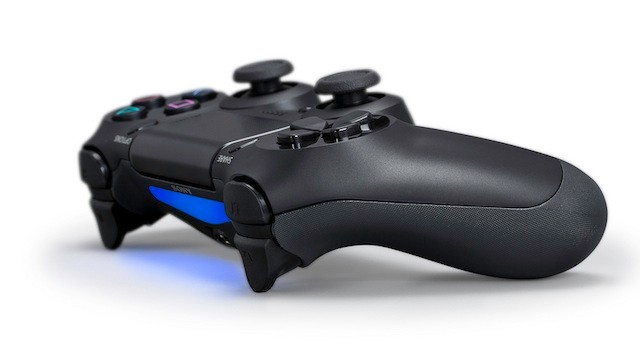
Sony has unveiled the next version of its next popular gaming console, the PlayStation 4, which it plans to release in time for the 2013 holiday season. PHOTO: Sony's Controller for the PlayStation 4.
Free live streaming by Ustream At a press conference on Wednesday evening in New York City, the company showcased the system's new graphics and controllers, but stopped short of revealing the system's casing. The system includes new social gaming features and mobile integration, all of which are a major update to Sony's PlayStation 3, which was introduced seven years ago.


"Today marks a moment of truth and a bold step forward for PlayStation as a company," Andrew House, president and Group CEO of Sony Computer Entertainment, said at the event. "Today we will give you a glimpse into the future of play."
Second and Third Devices
The living room is no longer the "center of PlayStation ecosystem," according to Sony -- it's now a mobile world. Nintendo's Wii U and Microsoft's Xbox also embraced a similar theme last year. The Wii U even ships with a new tablet-like controller called the GamePad, which lets you stream the game and play it away from the TV and right on the controller.
With the PlayStation 4, Sony will be taking its existing portable gaming device -- the PS Vita -- and applying a similar concept. The Vita will work in conjunction with the new console and function as a controller. Sony, which makes its own line of Xperia Android phones and tablets, also announced plans to integrate tablets and phones into the social gaming experience.
Sony
Sony's DualShock 4

Graphics
While Sony didn't show the actual gaming console or hardware off at the event, it did showcase the forthcoming system's graphics prowess. Powered by an eight-core x86 processor and 8GB of RAM, Sony showcased "Driveclub" to display the level of detail that the PlayStation 4 is capable of. With "microscopic metallic flakes of paint" and car seat interiors with fibers that reflected tiny points of light, the system promises next-generation and unmatched graphics. Another demo showed a million objects being dropped at once as well as a "Killzone: Shadow Fall" battle that spanned a huge, moving city.
At the event, game developers made claims that PlayStation 4 has had a "quantum leap in graphics and AI" leaving them now only limited by their imaginations.
Social Media
The Wii U took an early stab at building a social network within a home console with its Mii-verse of game chatter and doodles, but PlayStation 4 will go a step further and feature "enhanced social capabilities" made possible through partnerships with Facebook and UStream. In a bid to become the "fastest most powerful gaming network in the world," Sony will be putting social media at the core of PS4 experiences, giving gamers the ability to share live streams of their gameplay online with the press of a button. In fact, the new DualShock controller will have a dedicated button just for sharing content to social media.
The DualShock 4 Controller
PlayStation's "iconic" controller won't be changing much in shape and size, but more bells and whistles have been added. The aforementioned share button, a colored light bar to give each player a little flare, and a sensor that will allow the PS4's Kinect-like camera depth-and-motion sensor to read where the player is, have all been added to the enhanced controller. Sony didn't detail how the camera will be used in games.
As mentioned, the company did leave out key details, including what the actual box that will be sitting beneath TV sets will look like, or pricing details.
"As far as the system itself we have to keep something new for later," Shuhei Yoshida, President of Sony's Worldwide Studios explained the move in an interview with Kotaku. "Otherwise you'd get bored."

keep up with the newest technologies and contemplate about how these will be used in the future. On this blog I'll share my thoughts about the future of technology, based on the high Tech RoadShow inventions of today. Enhanced by Zemanta
Enhanced by Zemanta
Share: 

HTC Bringing Beats Audio to Mid-Range Primo Android 4.0 Handset

Despite its larger than life name, the HTC Primo will be targeted as a mid-range Android smartphone running Google’s Ice Cream Sandwich platform. However, it seems that HTC will be moving to make its premium audio experience, thanks to a partnership with Beats Audio, more widely available and the mid-range Primo will be bundled with Beats Audio.

The latest render of the HTC Primo depicts a device with a 3.7-inch screen devoid of any Android navigation keys. Instead, the navigation keys, like on Samsung’s Galaxy Nexus, have been moved to the screen area. The device will feature Gorilla Glass, though it’s unclear if this will be the new Gorilla Glass 2 screens that were introduced at CES 2012. The phone will have a dual-core 1.0 GHz Snapdragon CPU, 512 MB RAM, and rear-facing 5-megapixel camera with 720p HD video capture.

The phone is expected to be announced at Mobile World Congress next month alongside HTC’s more premium rumored handsets, like the HTC Ville and the HTC Edge, which may launch as the HTC Supreme.

Via: PocketDroid

keep up with the newest technologies and contemplate about how these will be used in the future. On this blog I'll share my thoughts about the future of technology, based on the high Tech Road Show Blog inventions of today.
Enhanced by Zemanta
Share: 

Samsung Galaxy Tab 10.1 review


When we met with Samsung in late May, company representatives didn't seem entirely sure that the company would meet the rumored June 8th ship date here in the US, but lo and behold, it's done just that. The tablet's launching at noon today at the Best Buy in New York City's Union Square, and if you can't make it up to the Big Apple, it'll hit the rest of the nation on June 17th. But here's the real question: is it worth making an effort to snag it on either date? The Galaxy Tab 10.1, much like its Limited Edition sibling that we reviewed last month, is ever-so-slightly thinner than the iPad 2, a slate that most sane individuals (and competitors, for that matter) would confess is the market leader today.

BERLIN - SEPTEMBER 03:  (FILE PHOTO) Visitors ...Image by Getty Images via @daylifeNaturally, everyone and their sister is gunning for Apple in this space, and Honeycomb's the first mobile OS we've seen that has the potential to put any sort of damper on Cupertino's ongoing rave. By and large, the consumer version of the Tab 10.1 is the same as the device launched at Google I/O, but there's two key differences that we'll focus on here: the tamed design, and the thoroughly different OS version (v3.1 here versus v3.0 before). Head on past the break for an in-depth look into both of those, but be sure to first take a gander at our Limited Edition review to wrap your noodle around the basics.

Hardware and design
You're going to hear this a lot throughout the review, but every opinion we drew from using the Tab 10.1 Limited Edition applies here. Every. single. one. Why? The consumer model is is a spitting image of the LE variant, save for the motif on the rear; the one you'll pick up this month has a glossy white plastic rear, while the LE model had a glossy white plastic rear... with an Android army adorning it. Weight's the same, size is the same, build quality is the same. It's a tremendous thing to hold, and it truly oozes quality from corner to corner.
Outside of the color scheme on the rear, nothing is different this go 'round. We promise.


Performance and battery life
While the internals remain the same here as on the Limited Edition build (1GHz Tegra 2, 1280 x 800 resolution display, front- and rear-facing cameras), something's changed with Android 3.1. Google claimed that the newest build of Honeycomb would perform even faster than 3.0, and in practice, thingsdid seem to operate at a subtly brisker pace. Animations were a pinch quicker, and transitions were ever-so-slightly faster. Web browser performance was noticeably better, although we did see a few videos load up in a smaller window while the same video expanded out to fill the screen within Android 3.0.


But that said, we're having a difficult time aligning our real-world experience and our benchmarks. The Tab 10.1 Limited Edition (which shipped with an admittedly wonky version of Android 3.0) managed to hit an average of 1,970 within Quadrant benchmark -- a standard benching tool that was also used in ourG-Slate and Xoom review. You'd expect the streamlined Android 3.1 sibling to perform better, but alas, that wasn't at all the case. After running the same test five times on the Tab 10.1, we hit an average score of 1,540. The highest we saw was 1,546. That's off of a fresh reboot with nothing spinning in the background aside from the occasional widget update. It's as baffling to us as it likely is to you; we're guessing that Quadrant just reacts dramatically different to v3.1 than v3.0, and we're obviously eager to see if future Android 3.1 slates score lower across the board than the 3.0 devices that came before.


When we sat down to our video loop test, with WiFi on and display brightness at about 65 percent, we scored just under ten hours (again!). That's second only to the iPad 2, and by merely half an hour. Jack that brightness down a bit, and you could probably squeeze 11 hours out. The upside is that Android 3.1 doesn't seem to have a negative impact on battery life; the downside is that Android 3.1 doesn't seem to be any more power efficient than Android 3.0.

As for audio and video playback? It's what you'd expect; Music Beta streamed our cloud library sans issue over a home WiFi network, and the audio output is on par with every iDevice you've ever tested. It's not quite up there with Cowon or anything, but then again, neither is anything else in this field. Flash, DivX, MPEG4 and H.264 files all played back exceptionally well. Even 720p content seemed to cause no strain whatsoever on the system, though we'd still probably recommend transcoding any of those files you've got sitting around in esoteric containers. Again, this isn't a Cowon, so it ain't going to support everything you throw at it.

Software
At long last, the primary differentiator between the Tab 10.1 LE and the far-less-limited Tab 10.1: 0.1.Android 3.1 brings along widgets that can be resized vertically and horizontally, access to the newfangled Movies section of the Android Market, improved overall performance and support for a host of USB accessories. Unfortunately, the Movies department is only open for Android 3.1 tablets with 3G radios, hence, our 16GB WiFi test unit still showed it as unavailable. That said, we've already tested that particular aspect with a Motorola Xoom, which can be seen here.


The performance improvements, however, are here. They're subtle, sure, but you won't find us kvetching about extra speed, regardless of how minor it is. Granted, we didn't have any real qualms with performance on the Tab 10.1 Limited Edition, but it's safe to say we've even fewer qualms here. Resizing widgets worked, and worked well, but it's mildly annoying that it only supports a smattering of 'em right now -- we're hoping to see more apps updated soon to take advantage, and when that happens, homepane tweakers will no doubt find these remarkably useful. It enables each pane to be full of useful, glanceable information -- a sizable calendar prevents you from having to load the app each time, for example.


Outside of that, the software's largely unchanged from where Honeycomb began. Those anticipating a significant overhaul will be sorely disappointed, but we're thrilled to say that Google's polished up an already excellent foundation. Unfortunately, the Android Market still isn't home to many tablet applications; Apple just announced at WWDC that the App Store is home to some 95,000 tablet programs. El Goog hasn't shared its numbers in this regard, but it doesn't take an awful lot of poking around to see that it's nowhere near. Honeycomb still has a lot to prove, and it's up to developers to prove it. For now, those looking for a wealth of options will have better luck wading through the App Store, but hopefully things will be drastically different as the year churns on.


We'd also like to point out a huge, huge issue with using the Galaxy Tab 10.1 in conjunction with OS X. For whatever reason, Android File Transfer still hasn't been updated to support this slate, which means that you cannot (easily) use your Mac to transfer files onto your device. We have to wonder what Google was thinking when it fundamentally changed how Macs could interface with Android; our Nexus One (Android 2.3) simply pops up as an external drive on the desktop of a MacBook Pro, while Honeycomb devices require a dedicated piece of software that may or may not work. Blech. We're hoping Google updates AFT in the hours ahead; otherwise, you can expect the forums to come alive as Mac owners struggle to make contact with the $500+ slate they just bit on.

Camera

No shocker here -- the 3MP rear camera on the Tab 10.1 impressed us just as much as the camera on the Tab 10.1 Limited Edition. We still aren't sold on using a slate to take photos, and we still aren't overly impressed with the image quality here. It's hard to knock something that most folks aren't going to take advantage of, though, so we'll just let the below sample shot gallery speak for itself.

Wrap-up
The conclusion we came to after using the Tab 10.1 Limited Edition mimics the conclusion we've drawn here: this is the best Honeycomb tablet to date, and lucky for you, this one's available to purchase! Only time will tell if the Android Market will prove to be as well-stocked as the App Store, and if you're willing to wait, this here slate provides a world-class Gmail experience, better handling than the iPad 2 (in our humble opinion, anyway) and a higher resolution display.


The 16GB WiFi model will hit for $499 -- exactly in line with the iPad -- while the 32GB variant will demand $100 more (we're still awaiting word on 3G prices). If you're sold on Android, and you aren't too concerned with having an LTE radio in your tablet, there's really no need to look elsewhere. Of course, the impending release of iOS 5 makes it awfully hard to ignore just how good the iPad 2 will be this fall, but who's living in the future, right?


We'd still prefer Music Beta to be more more like iTunes in the Cloud, and we'd love a microSD slot, but we can't help but applaud Samsung for pushing Android tablets to a level they've never reached prior to now.
Enhanced by Zemanta
Share: 

Wall Street protesters inspired by Arab Spring movement

By Michael Saba, CNN
AdBusters and other online activitsts, including hacker collective Anonymous, call for a Saturday march on Wall Street.
STORY HIGHLIGHTS
  • Internet activists have taken to Twitter, other sites to "Occupy Wall Street" on Saturday
  • Organizer says digital uprisings in places like Egypt and Iran are an inspiration
  • The hacktivist group Anonymous urged its supporters to participate in the sit-in

(CNN) -- It worked in Cairo's Tahrir Square. Now, taking their cue from social-media fueled uprisings in places like Egypt and Iran, a band of online activists hopes it will work on Wall Street.

Kalle Lasn, co-founder of the counterculture magazine AdBusters, has taken to Twitter and other websites to help organize a campaign encouraging tens of thousands of Americans to hold a nonviolent sit-in Saturday in Lower Manhattan, the heart of the U.S. financial district.

This past spring and summer saw a massive groundswell of populist demonstrations against authoritarian regimes in North Africa and the Middle East -- the Arab Spring of 2011.

In Tunisia, Egypt, Libya, Bahrain and Syria, protesters took to the streets and occupied public spaces to protest stagnant economies, lack of freedom of expression and regimes that seemed more concerned with consolidating power than addressing the needs of the people.

Each of these revolutions began differently, but they all were organized and fueled by tech-savvy social media users, particularly on Facebook and Twitter. Lasn now wants to use the Internet for a protest in the United States.

"There's a very visceral anger against the financial community," Lasn said. "Many people feel that these people who are financial fraudsters, who basically got away with it, have yet to be brought to justice... It seems like we the people now have to congregate on Wall Street and other financial districts around the world and force the global economic system to move in a better, more just direction."

Adbusters' protest campaign -- with the hashtag #occupywallstreet -- began in July with the launch of a simple campaign website calling for a march through the streets of Lower Manhattan and a sit-in at the New York Stock Exchange, just as demonstrators did in Tunis' November 7 Square and Cairo's Tahrir Square.

The campaign got a sizable boost in August from the hacktivist group Anonymous, which released a short video urging its supporters to participate in the sit-in.

Since then, the movement has seen the addition of planned protests in other countries, including Japan, Israel, Canada and a half-dozen European nations.

The aim of #occupywallstreet is to draw 20,000 protestors to New York's financial district, although Lasn hopes for as many as 90,000.

"In Tunisia and in Egypt, the Internet was used to organize surprising numbers of people to get out into the streets and start a radical, democratic movement for regime change," Lasn said. "Of course, the situation here in America and many European countries is quite different. We're not living under a torturous dictatorship, for one.

"Nonetheless, there's a feeling that the global financial system, the heart of which is in the U.S., in New York, that this system is somehow having its way with us," he said. "There's a feeling that we need a revolution in the way that our economy is run, the way that Washington is run."

This isn't, Lasn stresses, an excuse for rioting and looting like the world recently witnessed in the United Kingdom. It's a call for radical change, but in the tradition of nonviolent protesters like Mahatma Gandhi, he says. If protests turn violent, he fears the message will be lost.

"What we are hoping for is to have a very large number of people turn up in Lower Manhattan and start walking toward Wall Street peacefully, signs in hand," Lasn said. "If we have peaceful assemblies and debates about what our demands to President Obama should be, then bit by bit we can create a situation that will rival what happened in Egypt."

"That would be a wonderful, energizing and positive moment to feel like we the people are in charge," he said.

Enhanced by Zemanta
Share: 

Vadim Lavrusik About 1 hour ago Vadim Lavrusik 1 Google: Mobile Search and Ads Growing Rapidly in 2010

Image representing iPhone as depicted in Crunc...Image via CrunchBase

Not only has Google’s mobile search volume grown more than fivefold over the course of the last two years, but the clickthrough rates for its click-to-call mobile ads do 6-8% better than search ads without a number or URL associated with it, according to Mike Steib, director of emerging platforms at Google.

Steib, who participated in a panel today at PaidContent2010 Mobile Conference in New York, said that 2010 just might be the year that mobile takes off. “We’re seeing lots and lots of search activity on smartphones.”

Turning to Rachel Pasqua, the director of the mobile group at iCrossing, Steib joked about turning the panel into a business meeting and encouraged her to buy more ads for their clients. Pasqua responded by saying that many of her clients have been very happy with the ads and have had “tremendous success.”


Finally the Year of Mobile?


We have heard the phrase “Year of Mobile” in years past, and yet predictions have repeatedly failed to satisfy the hype — at least until 2010. In the first three months of this year, for example, users with smartphones searched 62% more than they did in the previous three months. Search on Android () devices has grown 300% in the first half of 2010 with about 160,000 new Android devices being activated everyday.

Although Steib wouldn’t specify the exact numbers, he did say that tens of millions of people make searches through Google () on mobile devices each week, generating hundreds of millions of searches. And iPhone users, who dominate the smartphone market, are performing 50 times more searches than users of standard mobile features.


Mobile Ads On the Rise


Mobile ads are doing better too, Steib said, especially click-to-call ads, which enable advertisers to add phone numbers to their ads. Advertisers are able to track how many calls they are getting per keyword, ad group or campaign. The click-to-call campaigns with location extensions or URLs increase 8% in average clickthrough rates, and campaigns with phone numbers perform 6% better than mobile ads without an extension.

It makes sense; businesses get a direct call from a potential customer or a click to their website. The biggest differentiator between desktop and mobile ads is location targeting. If users search for something on a mobile app, they are “astronomically” more likely to click on the ad presented to them if it is for a nearby business.

Google expanded the click-to-call campaign by offering it to local advertisers in addition to national ones just four months ago, so perhaps the increase in click-through rates is being affected by the large advertisers.

When asked about the looming Apple’s iAd product, Steib said it will be a great solution as long as it is part of a menu of choices. He said that publishers will likely be interested in iAds, but will want to have an array of choices for advertising to be able to reach their audience.

Enhanced by Zemanta
Share: